
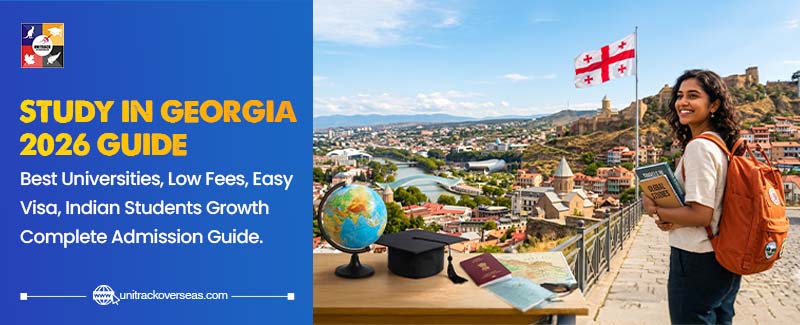
When most Indian families sit down to plan an overseas education, the usual destinations come up — the UK, Canada, Australia, maybe Germany. Georgia rarely gets mentioned first. But in 2026, that is starting to change, and for very good reasons.
Georgia offers something rare: a legitimate European education, delivered in English, at a cost that does not require a lifetime of debt. For students from North India — particularly those in Chandigarh, Ambala, and Saharanpur — it has quietly become one of the most practical destinations on the map.
At Unitrack Overseas, we have spent years guiding students through options that actually make sense for their goals and budgets. Georgia keeps coming up. Here is why.
Georgia at a Glance: Key Facts for 2026–27
| Detail | Information |
|---|---|
| Intakes | February and September |
| Language of Instruction | English |
| Average Tuition Fees | $3,500 – $6,500 per year (USD) |
| Monthly Living Cost | $300 – $500 USD |
| Popular Programs | Medicine (MBBS), Business, Engineering, IT, Dentistry |
| Visa Type | D-type Student Visa |
| Visa Processing Time | 3–6 weeks |
How Education in Georgia Works
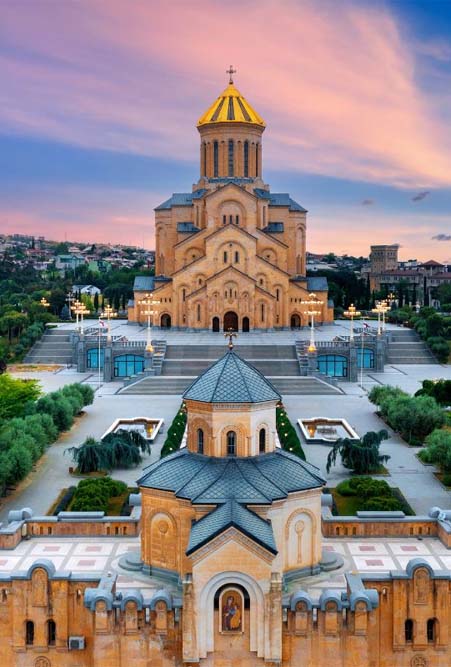
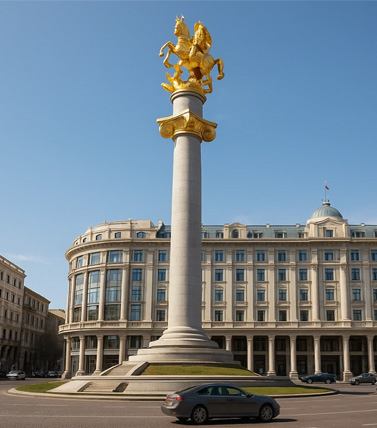
Georgia’s higher education follows the European Bologna Process — degrees recognised internationally. All institutions monitored by the NCEQE.
- Bachelor’s degree: 3–4 years
- Master’s program: 1.5–2 years
- Doctoral (PhD): 3–4 years
Part of the European Higher Education Area (EHEA) — students can transfer credits to other European universities. Learn about studying in Europe →
Top Universities in Georgia for Indian Students — 2026
Unitrack Overseas works with a carefully selected group of Georgian universities. Below are the institutions we recommend, with accurate tuition fees for 2026 intakes.
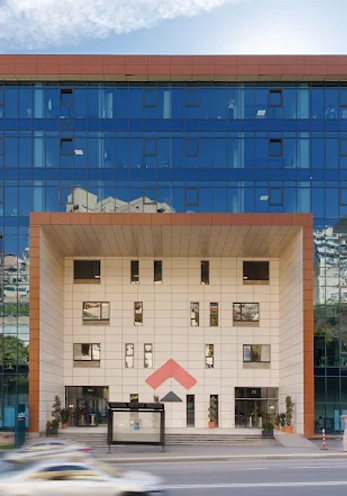
1. Alte University, Tbilisi
Alte University stands out for its modern campus and own Ivane Bokeria Hospital providing on-campus clinical training. Affiliated with the Georgian Healthcare Group (GHG), giving medical students access to real clinical environments from day one.
| Program | Duration | Annual Fee (USD) |
|---|---|---|
| MBBS (Medicine) | 6 Years | $5,950 |
| Dentistry | 5 Years | $4,500 |
| Computer Science | 4 Years | $3,500 |
| AI & Data Analytics | 4 Years | $3,950 |
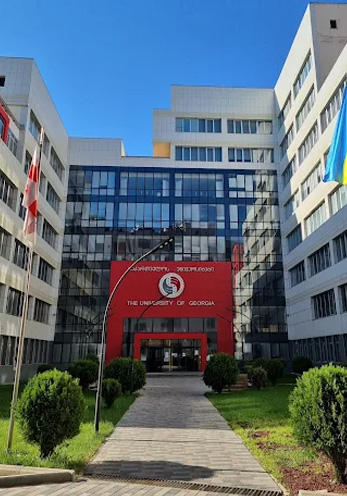
2. University of Georgia (UG), Tbilisi
One of the most established private universities in Georgia with programs in business, engineering and medicine. Competitive academic environment with a strong international student community.
| Program (4 Years) | Annual Fee (USD) |
|---|---|
| Business Administration | $4,000 |
| Business Analytics | $4,000 |
| Computer Science | $4,000 |
| Nursing | $4,000 |
| Electronic & Communication Engineering | $4,500 |
| Pharmacy | $4,500 |
| Computer Engineering | $4,500 |
| Civil Engineering | $4,500 |
| Bachelor’s in Artificial Intelligence | $4,000 |
| Bachelor’s in Cybersecurity Engineering | $5,000 |
| Master’s Programs (2 Years) | Annual Fee (USD) |
|---|---|
| Business Administration | $4,000 |
| International Business Law | $4,000 |
| Computer Science | $4,000 |
| Master’s in Cybersecurity | $5,000 |
| Master’s in Financial Risk Management | $5,000 |
| Blockchain – Distributed Information Systems | $4,000 |
| Single Cycle Programs | Duration | Annual Fee (USD) |
|---|---|---|
| Dentistry | 5 Years | $6,000 |
| Medicine (MBBS) | 6 Years | $6,500 |
Total Cost of Living in Georgia
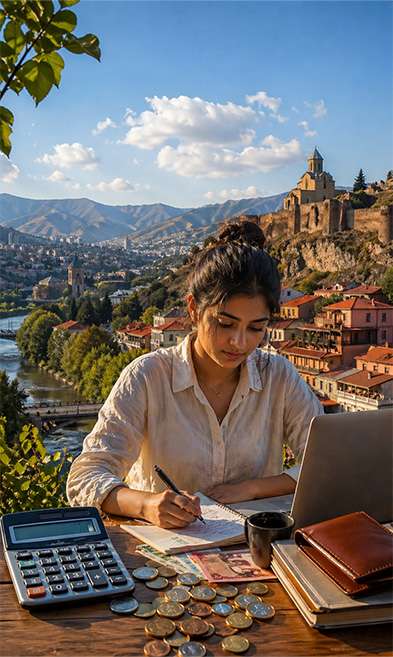
One of the strongest arguments for Georgia is how affordable daily life is. Students can live comfortably without constantly worrying about money.
| Expense Category | Monthly Estimate (USD) |
|---|---|
| Accommodation (shared/hostel) | $80 – $150 |
| Food & Groceries | $80 – $120 |
| Local Transport | $20 – $40 |
| Utilities & Internet | $30 – $50 |
| Health Insurance | $20 – $30 |
| Personal & Miscellaneous | $50 – $110 |
| Total Monthly Living Cost | $300 – $500 USD |
Compared to the UK ($1,500+/month) or Canada ($1,200–$2,000/month), Georgia allows families to plan with confidence.
Popular Programs for Indian Students in Georgia
Medicine and healthcare remain most sought-after, but demand for engineering and technology programs has grown sharply.
| Program Area | Typical Courses | Why It Is Popular |
|---|---|---|
| Medicine & Healthcare | MBBS, Dentistry, Nursing, Pharmacy | WHO-recognized, NMC-approved, clinical training |
| Business & Management | BBA, MBA, Business Analytics | European curriculum, global career prospects |
| Engineering & Technology | Civil, Computer, Cybersecurity | Affordable fees, strong technical foundation |
| IT & Computer Science | CS, AI, Data Analytics, Blockchain | Growing tech sector, international demand |
| Arts & Social Sciences | Philology, Global Governance | European academic structure |
Admission Requirements & Application Process
Who Can Apply:
- Bachelor’s: Min. 50% in Class 12 (PCB for medicine)
- Master’s: Relevant undergraduate degree
- No IELTS/TOEFL — Class 12 English marks accepted
- Minimum age: 17 years
Step-by-Step Process:
- Shortlist university & course
- Submit online application with documents
- Attend short online interview (if required)
- Receive Conditional Offer Letter & pay deposit
- Collect Admission Confirmation Letter
Two intakes per year — September and February. Read our complete study abroad guide 2026 →
Georgia Student Visa: What Indian Students Need to Know
Indian students require a D-type Student Visa valid for the duration of the enrolled program, renewable each academic year.
Documents Required:
- Valid passport (6+ months validity)
- Admission letter from Georgian university
- Proof of tuition fee payment
- Bank statement
- Valid health insurance
- Passport-size photographs

Why More Indian Students Are Choosing Georgia in 2026
💰
Tuition Fees That Make Financial Sense
At $3,500–$6,500/yr, Georgia’s tuition is a fraction of UK, Ireland, or Australia. No massive loans. No decade of debt.
🏥
NMC & WHO Recognised Medical Degrees
MBBS and Dentistry degrees recognised by NMC & WHO. Graduates can appear for FMGE in India.
🚫
No IELTS Required
Class 12 English marks accepted. No standardised test score needed — just a short online interview.
🛂
Fast & Transparent Visa Process
D-type Student Visa processed in 3–4 weeks. Clear documentation, predictable outcomes.
🏙️
Genuinely Affordable Daily Life
$300–$500 USD/month. Tbilisi has vibrant student communities and plenty of affordable housing.
🎓
European Degree Structure
Bologna Process degrees recognised across Europe. Easy credit transfer for Master’s or PhD in Europe. Study in Europe →
Working While You Study in Georgia
International students in Georgia are permitted to work part-time during the academic year, which helps offset living expenses.
| Period | Permitted Hours | Average Pay |
|---|---|---|
| During studies | Up to 20 hrs/week | $4 – $6 USD |
| During semester breaks | Up to 40 hrs/week | $5 – $7 USD |
Common sectors: hospitality, retail, tutoring, and administrative support at the university itself.
How Unitrack Overseas Helps You Get There
At Unitrack Overseas, we are not a ticketing service. We are a team of counselors who understand each student’s profile, goals, and family situation. Book a free counselling session →
🎯
University Selection
Right university and program based on your academic background and career goals.
📄
Document Preparation
Complete document preparation, application review, and submission support.
🛂
Visa Guidance
End-to-end D-type Student Visa application guidance.
✈️
Pre-Departure Support
Orientation briefing — what to expect on arrival in Georgia.
🤝
First Semester Support
Continued support throughout your first semester abroad.
Frequently Asked Questions
Q1. How much does it cost to study in Georgia in 2026?
Tuition fees range from $3,500 to $6,500 USD per year. Monthly living costs are $300–$500 USD. Total annual expenditure typically falls between $7,000 and $14,000 USD.
Q2. Is IELTS required for Georgian universities?
No. Most Georgian universities do not require IELTS for Indian students who have completed schooling in English. A short online interview is usually sufficient.
Q3. Are Georgian MBBS degrees valid in India?
Yes — provided you graduate from an NMC-recognized and WHO-listed university. MBBS graduates must clear the FMGE to obtain a license to practice in India.
Q4. Can Indian students work while studying in Georgia?
Yes. International students may work up to 20 hours per week during the academic term and full-time during scheduled semester breaks.
Q5. When should I apply for the September 2026 intake?
We recommend beginning no later than May–June 2026. Read our complete 2026 study abroad guide →
Related Articles from Unitrack Overseas
📘
Complete Guide to Study Abroad 2026
Step-by-step success guide for Indian students planning to study abroad.
Read More →🇪🇺
Study in Europe with Unitrack Overseas
Everything you need to know about studying in Europe — countries, costs, and visa.
Read More →🛂
How Unitrack Helps Secure Your Visa
Unitrack’s proven process for securing student visas to Canada, Australia, Europe & USA.
Read More →✍️
Top Do’s and Don’ts for writing a successful Statement of Purpose for your student visa.
Read More →Get in Touch with Unitrack Overseas
📍 Chandigarh: SCO 142-143, 1st Floor, Sector 34-A, Chandigarh
📞 Call: 0172-4910111 | +91-8278-555-666 | +91-9855-777-666
📍 Ambala: SCO 8, 1st Floor, HUDA Complex, Sector 6, Ambala City, Haryana
📞 Call: 8765-777-666 | +91-90411-60426
📧 Email: info@unitrackoverseas.com | amb@unitrackoverseas.com
🌐 Website: www.unitrackoverseas.com
Disclaimer: This blog has been prepared by the team at Unitrack Overseas for informational purposes. Tuition fee figures are sourced from university brochures and are approximate, subject to change at the institution’s discretion. For accurate, personalized guidance, we encourage you to speak directly with one of our counselors.