
Table of Contents
- Why Do Student Visas Get Rejected?
- 1. Weak Financial Documentation
- 2. Unconvincing Statement of Purpose (SOP)
- 3. Doubts About Genuine Student Intent
- 4. Low English Language Proficiency Scores
- 5. Incomplete or Inconsistent Documentation
- 6. Poor Academic Record or Unexplained Gaps
- 7. Previous Visa Refusals or Immigration History
- How to Reapply Successfully
- Tips to Avoid Rejection the Second Time Around
- Final Thoughts
- Frequently Asked Questions
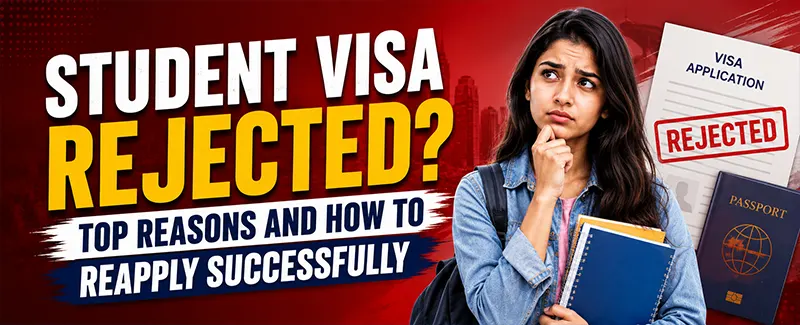
Getting a student visa rejected can feel like your entire study abroad plan has come crashing down. After months of preparing documents, clearing IELTS or PTE, and securing a university offer letter, a refusal letter is disheartening. But here is the good news: a visa rejection is not the end of the road. Thousands of students who face refusal every year go on to get approved on their second or third attempt, simply because they understand what went wrong and fix it the right way.
In this blog, we break down the most common reasons student visas get rejected and share a practical, step by step approach to reapplying with confidence.
Why Do Student Visas Get Rejected?
Visa officers evaluate every application against strict criteria set by the destination country’s immigration authority. Even a small gap or inconsistency can lead to refusal. Here are the most common reasons.
1. Weak Financial Documentation
This is the number one reason for student visa refusals. Immigration officers need proof that you or your sponsor can comfortably cover tuition fees and living expenses for the entire duration of the course. Common financial red flags include:
- Sudden large deposits in bank accounts without a clear source
- Insufficient funds to meet the minimum financial requirement
- Unexplained gaps in income or inconsistent bank statements
- Loans or sponsorships that are not properly documented
2. Unconvincing Statement of Purpose (SOP)
Your SOP is where you explain why you chose a particular course, university, and country, and how it fits into your career goals. A generic, copy pasted, or vague SOP raises doubts about your genuine intent to study. Visa officers look for a clear, logical, and personalized narrative that connects your academic background to your future plans.
3. Doubts About Genuine Student Intent
Immigration authorities assess whether you intend to return home after completing your studies or whether the application appears to be a way to migrate permanently through the back door. Weak ties to your home country, such as no family responsibilities, no property, or no clear career plan post study, can trigger this doubt.
4. Low English Language Proficiency Scores
Most countries require a minimum IELTS, PTE, TOEFL, or Duolingo score for both university admission and visa approval. Scores that barely meet or fall below the minimum band requirement, especially in individual sections like writing or speaking, often lead to rejection.
5. Incomplete or Inconsistent Documentation
Missing documents, mismatched information between your application form and supporting papers, expired documents, or incorrect formatting are simple but common mistakes that lead to refusal.
6. Poor Academic Record or Unexplained Gaps
A low academic score combined with an unclear reason for choosing a particular course, or unexplained study gaps without a valid justification, can make officers question your genuine academic intent.
7. Previous Visa Refusals or Immigration History
If you have been refused a visa before, whether for the same country or a different one, and you fail to disclose it or address it properly in your new application, it can seriously damage your credibility.
How to Reapply Successfully After a Student Visa Rejection
A rejection letter usually mentions specific grounds for refusal. This document is your roadmap for the next application. Here is how to approach your reapplication strategically.

Step 1: Read the Refusal Letter Carefully
Do not rush into reapplying. Understand exactly why your visa was refused. Every reason mentioned needs to be addressed individually in your next application.
Step 2: Strengthen Your Financial Profile
If finances were the issue, make sure your funds are seasoned, meaning they have been in the account for the required period, and that the source is well documented with salary slips, ITRs, property papers, or loan sanction letters.
Step 3: Rewrite Your SOP
Avoid reusing your old SOP. Write a fresh, honest, and detailed statement that clearly explains your academic choices, career goals, and ties to your home country. If your previous SOP had a rejection, it is important to directly acknowledge the improvements made since then.
Step 4: Improve Your Language Test Scores
If your IELTS or PTE score was on the lower side, consider retaking the exam and aim for a score comfortably above the minimum requirement, particularly in the sections where you struggled.
Step 5: Address Previous Refusal Directly
Most application forms ask if you have been refused a visa before. Always answer honestly and include a brief, clear explanation of the steps you have taken to resolve the earlier issues. Hiding a previous refusal is a serious red flag that can lead to permanent bans in some countries.
Step 6: Get Professional Guidance
Visa rules and documentation requirements change frequently and vary by country. Working with an experienced consultant can help you identify gaps in your file before you submit it, saving you time and another potential rejection. This is where consulting an expert for reliable visa services makes a real difference, since professionals know exactly what each immigration office expects from an application.
Step 7: Choose the Right Course and Country
Sometimes a rejection is a sign to reconsider your options. If you are unsure which destination suits your profile better, it helps to explore different study destinations and compare eligibility criteria, cost of living, and visa approval trends before finalizing your next application.
Not Sure Where to Start?
Get your visa file reviewed by our experienced counselors before you reapply, so every gap is fixed the first time.
Tips to Avoid Rejection the Second Time Around
- Apply well in advance to avoid last minute document errors
- Double check every form for consistency with your supporting documents
- Keep your financial documents transparent and well organized
- Be honest about your academic and immigration history
- Practice for your visa interview if applicable
A well prepared SOP paired with the right English test score can significantly improve your approval chances, and understanding how these two elements work together is worth exploring in detail.
Final Thoughts
A student visa rejection is not a reflection of your potential, it is usually a result of gaps in documentation, presentation, or preparation. By carefully analyzing your refusal letter, strengthening the weak areas, and presenting a clear and honest application, you significantly improve your chances of success on your next attempt. With the right guidance and attention to detail, your study abroad dream is still very much within reach.
Frequently Asked Questions (FAQs)
Ready to Reapply With Confidence?
Get a free file review from our visa counselors and find out exactly what to fix before you submit your next application.