
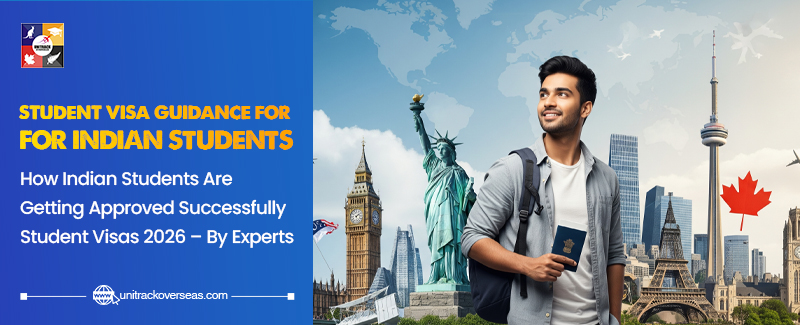
Student Visa Success Secrets: How Indian Students Are Getting Approved in 2026 (Complete Roadmap)
The dream of studying abroad has never been more achievable for Indian students, yet the visa rejection rate remains a harsh reality that crushes thousands of aspirations every year. What separates successful applicants from those facing heartbreaking rejections? After helping hundreds of students from Chandigarh, Punjab, and Haryana secure their international education dreams, we’ve uncovered the proven strategies that dramatically increase your chances of visa approval.
Why 2026 Is the Golden Year for Indian Students
There is a growing demand among universities and employers throughout the world for Indian students, who have established themselves as a top talent source in recent years. With changing demographic profiles, labour shortages due to COVID-19, and a global economy in recovery mode, Indian students studying overseas will experience an unprecedented level of opportunity in 2026. Understanding what visa officers look for can make the difference between holding your acceptance letter with a denied visa and boarding that flight to your dream university.
The Hidden Truth About Visa Rejections Nobody Talks About
Most students believe that good academic scores and university acceptance letters guarantee visa approval. This misconception leads to devastating rejections that could have been easily prevented.
The reality? Visa officers aren’t just evaluating your academic credentials. They’re assessing whether you’re a genuine student with clear intentions, sufficient financial backing, and strong ties to your home country. Missing even one crucial element can trigger an automatic rejection, regardless of your stellar grades.
Common Mistakes That Lead to Instant Visa Rejection
- Incomplete or Inconsistent Documentation
Your visa application tells a story. When documents contradict each other or leave gaps in your narrative, visa officers raise red flags immediately. For instance, showing insufficient funds for tuition but claiming you’ll self-finance raises suspicions about the authenticity of your application.
- Poorly Written Statement of Purpose (SOP)
Your SOP is your voice in the application process. Generic, template-based statements that could apply to any student studying any course anywhere get rejected. Visa officers can spot copied content instantly, and artificial intelligence detection tools now flag AI-generated applications.
A compelling SOP demonstrates genuine passion for your chosen field, explains logical course progression from your previous studies, articulates clear career goals, and proves why studying abroad is essential for achieving these goals.
- Weak Financial Documentation
Financial stability is non-negotiable. Simply showing money in a bank account isn’t enough anymore. Visa officers scrutinize the source of funds, consistency of income over time, whether assets are liquid or fixed, and the financial profile of your sponsors.
Suddenly depositing large amounts just before applying raises immediate red flags. Your financial documents should tell a story of sustained financial capability, not desperate last-minute arrangements.
- Inability to Explain Course Choice
When students cannot articulate why they chose a particular course or how it aligns with their background and future plans, visa officers question the genuineness of their application. You must demonstrate deep understanding of your chosen program, how it builds upon your previous education or work experience, career opportunities specific to this qualification, and why this particular university offers the best program for your goals.
Country-Specific Visa Requirements You Must Know
Canada Student Visa 2026: What’s Changed
Canada remains the top choice for Indian students, but recent changes have made the process more stringent. The Study Permit now requires additional focus on provincial attestation letters, biometrics completion within specific timeframes, enhanced financial proof requirements, and clear post-graduation plans.
Processing Timeline: Standard applications take 8-12 weeks, but Student Direct Stream (SDS) applications can be processed in just 20 days for eligible candidates.
Financial Requirements: You’ll need to show proof of CAD 23,132 for living expenses plus full first-year tuition fees. These funds must be held in specific financial instruments approved by the Canadian government.
Australia Student Visa 2026: The Level 3 Advantage
The Benefits of a Level 3 Visa for Studying in Australia
Australia is still a favorite amongst Indian students and 2026 is looking to be a very opportune time for them – especially for applicants from Level 3 countries. Level 3 applicants have always viewed as a disadvantage, 2026 should be a time when they can gain from their Level 3 status if they approach it properly.
Let’s look at what the Level 3 advantage means.
What is Level 3 of the Australian Student Visa Classification System?
The Australian Government assesses student visa applicants by looking at their country’s risk levels and current risk levels for student visa applicants are broken down to Level 1-8, and current criteria for student visa applicants to Level 3 also includes:
More scrutiny of documentation
More scrutiny as a Genuine Student (GS)
More detailed financial, academic relevance, and intent
While these criteria are very stringent and provide potential risk to Level 3 applicants in obtaining their Student Visa to study in Australia, also provide an opportunity for Level 3 applicants who are well prepared.
UK Student Visa 2026: Post-Study Work Benefits
The UK’s Graduate Route visa allows students to stay for two years (three years for PhD graduates) after completing their studies, making it increasingly attractive. However, visa scrutiny has intensified, particularly around English language proficiency, academic technology approval scheme (ATAS) clearance for certain courses, tuberculosis testing requirements, and maintenance funds availability.
Financial Proof: You must show £1,529 per month for living costs in London (£1,171 outside London) for up to nine months, plus full first-year tuition fees.
USA Student Visa 2026: F-1 Visa Insights
Despite concerns about visa policies, the USA continues accepting qualified international students. The F-1 visa interview remains crucial, and preparation cannot be understated. Visa officers evaluate your confidence and clarity, ability to explain your study plans, understanding of program specifics, and proof of strong ties to India.
Interview Tips: Be prepared to explain why you chose this specific university and program, how you’ll fund your education, your plans after graduation, and why you’ll return to India after completing your studies.
New Zealand Student Visa 2026: Emerging Opportunity
New Zealand offers excellent education quality with relatively straightforward visa processes. The country has introduced the Pathway Student Visa allowing students to study up to three consecutive courses under one visa.
Unique Advantage: Post-study work rights range from 1-3 years depending on your qualification level, providing excellent opportunities for gaining international work experience.
Europe Study Visa 2026: Multiple Opportunities
European countries like Germany, Ireland, Malta, Netherlands, and Spain are becoming increasingly popular due to affordable or free education, strong post-study work opportunities, and the Schengen visa advantage allowing travel across 27 countries.
Germany Highlights: Public universities charge minimal tuition fees, most programs are available in English, and the post-study work visa allows 18 months to find employment.
Ireland Advantages: Strong tech industry presence, two-year stay-back option, and the Third Level Graduate Scheme for non-EU students.
The Complete Student Visa Application Roadmap
Phase 1: Research and University Selection (3-6 Months Before)
Start by thoroughly researching universities and courses that align with your academic background and career goals. Consider factors like university ranking and reputation, course curriculum and specializations, location and living costs, scholarship opportunities, and post-study work visa options.
Attend education fairs and webinars to connect directly with university representatives. Use official resources like UCAS for UK, College Board for USA, and Study in Australia to gather authentic information.
Phase 2: Test Preparation and Execution (3-4 Months Before)
Most countries require English language proficiency tests like IELTS, PTE, or TOEFL. Some countries also require specific entrance exams like GRE or GMAT for certain programs.
Pro Tip: Book your test dates well in advance as slots fill quickly during peak seasons. Allow time for retakes if needed to achieve required scores.
Phase 3: Application Submission (2-4 Months Before)
Submit university applications with all required documents including academic transcripts and certificates, letters of recommendation, statement of purpose or personal statement, resume or CV, portfolio (if required), and English language test scores.
Track application deadlines carefully as many universities have multiple intake seasons (January, May, September) with different closing dates.
Phase 4: Visa Application Process (Immediately After Acceptance)
Once you receive your university acceptance letter and Confirmation of Enrollment (CoE), begin your visa application immediately. Delays can result in missing your intake or facing rushed processing that increases rejection risk.
Document Checklist: Valid passport with at least six months validity, university acceptance letter and CoE, financial documents covering tuition and living expenses, academic transcripts and certificates, English language test scores, medical examination reports, police clearance certificate, passport-sized photographs, visa application forms completed accurately, and visa processing fees payment receipt.
Phase 5: Visa Interview Preparation (If Required)
Countries like the USA, UK, and Canada may require visa interviews. Preparation is absolutely critical for success.
Practice answering common questions: Why this university? Why this course? How will you fund your education? What are your career plans? Why will you return to India?
Be honest, confident, and concise. Avoid memorized answers that sound rehearsed. Speak naturally and maintain eye contact. Bring all original documents organized in a folder for easy access.
Financial Planning: The Backbone of Visa Success
Financial inadequacy is the leading cause of visa rejections. Your financial documentation must demonstrate not just availability of funds but also sustainability throughout your study period.
Accepted Financial Documents
Bank Statements: Minimum six months of statements showing consistent balance and income patterns. Sudden large deposits raise red flags.
Education Loans: Sanctioned letter from recognized banks covering tuition and living expenses. Disbursement should be aligned with visa processing timelines.
Sponsor Documents: If parents or relatives are sponsoring, provide their income tax returns, salary slips, bank statements, employment letters, and property documents.
Scholarships: Official scholarship award letters from universities or recognized organizations significantly strengthen your application.
Creating a Financial Profile That Impresses Visa Officers
Calculate total expenses including tuition fees, accommodation costs, food and daily expenses, travel and insurance, and miscellaneous expenses. Show funds covering at least the first year completely, with clear plans for subsequent years through savings, income, or loans.
Red Flag to Avoid: Don’t borrow money temporarily just to show in accounts. Visa officers verify fund sources and inconsistencies lead to automatic rejection.
The Power of Professional Guidance
While it’s possible to apply independently, professional consultants bring invaluable expertise that dramatically increases success rates. Experienced consultants understand the latest visa regulations and changes, know exactly what visa officers look for, can identify potential issues before submission, provide personalized strategies for your specific profile, and offer interview preparation and mock sessions.
At Unitrack Overseas Chandigarh, we’ve maintained consistently high visa approval rates by treating each student’s case uniquely. We don’t believe in one-size-fits-all approaches. Your background, aspirations, and circumstances are unique, and your application strategy should reflect that.
What Sets Quality Consultants Apart
Transparency: Clear communication about costs, timelines, and realistic expectations without false promises.
Personalized Attention: Detailed assessment of your profile and customized application strategy rather than template-based approaches.
University Partnerships: Direct relationships with universities providing inside knowledge about admission criteria and scholarship opportunities.
Comprehensive Services: Support extending beyond visa approval to pre-departure orientation, accommodation assistance, and post-landing support.
Success Track Record: Proven history of visa approvals with testimonials and success stories from real students.
Post-Visa Approval: Preparing for Departure
Receiving your visa is just the beginning. Proper preparation ensures a smooth transition to student life abroad.
Essential Pre-Departure Steps
- Book Flights Early: Airfare prices increase significantly as departure dates approach. Book at least 4-6 weeks in advance for better rates.
- Arrange Accommodation: Secure housing before arrival whether through university accommodation, private rentals, or homestays. Research neighborhoods for safety, proximity to campus, and cost.
- Health Insurance: Ensure adequate health insurance coverage as medical costs abroad can be astronomical. Many countries require mandatory student health insurance.
- Currency Exchange: Convert necessary funds to foreign currency. Carry a mix of cash, forex cards, and credit cards. Inform your bank about international usage to avoid card blocks.
- International SIM: Research mobile plan options in your destination country. Some students prefer getting local SIMs after arrival while others arrange international roaming.
- Academic Preparation: Review course materials if provided in advance, connect with future classmates through university social media groups, and familiarize yourself with academic expectations and cultural differences.
What to Pack: The Ultimate Checklist
Documents Folder: All original documents including passport, visa, university acceptance letter, financial documents, academic certificates, medical records, and travel insurance.
Clothing: Pack according to destination climate with versatile layers. Don’t over pack as you can purchase clothes locally.
Electronics: Laptop, phone, chargers, universal adapters, and power banks. Ensure your devices are unlocked for international use.
Medications: Carry sufficient prescription medications with doctor’s prescriptions. Research if any medications are restricted in your destination country.
Comfort Items: Photos of family, favorite snacks from home (check customs regulations), and small items that provide emotional comfort during initial homesickness.
Overcoming Visa Rejection: The Comeback Strategy
If you’ve faced a visa rejection, don’t lose hope. Many students successfully reapply and receive approval with the right approach.
Analyzing the Rejection
Request detailed rejection reasons from the embassy or consulate. Common grounds include insufficient financial evidence, doubts about genuine student intention, incomplete documentation, or previous visa violations or overstays.
Strengthening Your Reapplication
Address Specific Concerns: If financial inadequacy caused rejection, strengthen your financial profile with additional funds, education loans, or scholarship offers.
Improve Documentation: Ensure all documents are complete, consistent, and properly certified. Remove any ambiguities or contradictions.
Enhance Your Profile: Consider improving English language test scores, gaining relevant work experience, or completing preparatory courses that strengthen your academic background.
Write a Strong Appeal Letter: If reapplying, include a cover letter addressing how you’ve resolved the concerns that led to rejection.
Seek Professional Help: A consultant experienced in handling rejection cases can identify specific weaknesses and develop targeted solutions.
The Future of International Education for Indian Students
The global education landscape continues evolving with increasing digitalization, hybrid learning models, and stronger focus on employability. Countries are competing to attract international students by offering attractive post-study work rights and streamlined visa processes.
For Indian students, the opportunities are expanding. With proper preparation, genuine intentions, and strategic planning, studying abroad is more accessible than ever.
Your Next Steps Toward Study Abroad Success
The journey to studying abroad begins with a single informed decision. Don’t let fear of complexity or rejection hold you back from pursuing your dreams.
Take action today:
- Research thoroughly: Understand different countries, universities, and courses that align with your goals.
- Assess your profile: Evaluate your academic background, financial capacity, and career aspirations honestly.
- Plan your timeline: Map out when you want to start studying and work backwards to plan tests, applications, and visa processes.
- Seek expert guidance: Connect with experienced consultants who can provide personalized advice and prevent costly mistakes.
- Start preparing: Begin working on English language tests, gathering documents, and building your financial profile.
Remember, every successful student studying abroad today once stood exactly where you are now, wondering if it was possible. With determination, proper planning, and the right guidance, your international education dream can become reality.
At Unitrack Overseas Chandigarh, we’re committed to making this journey smoother for students from Chandigarh, Punjab, Haryana, and across India. Our proven track record, personalized approach, and comprehensive support system ensure you’re never alone in this journey.
Your future waits across borders. The question isn’t whether you can make it happen, but when you’ll take the first step. Start today, because your dream university and successful career abroad are waiting for students who dare to pursue excellence.
Frequently Asked Questions (FAQs) About Student Visas
- How long does it take to get a student visa from Chandigarh?
Visa processing times vary by country:
- Canada (SDS route): 20-30 days for students from Chandigarh area
- Australia: 4-6 weeks with India’s Level 2 status
- UK: 3-4 weeks for standard applications
- USA: 2-4 weeks after interview scheduling
- New Zealand: 4-8 weeks
- Europe (Germany, Ireland): 6-12 weeks
Processing times can be faster when you apply through experienced consultants in Chandigarh who ensure complete and accurate documentation from the start.
- What is the cost of hiring a visa consultant in Chandigarh?
Professional visa consultancy fees in Chandigarh typically range from ₹25,000 to ₹75,000 depending on the destination country and services included. At Unitrack Overseas Chandigarh, we offer transparent pricing with no hidden charges. Our comprehensive packages include university selection, application assistance, visa filing, interview preparation, and pre-departure orientation. We also provide free initial counseling to students from Chandigarh, Ambala, Panchkula, and surrounding Punjab areas.
- Can I apply for a student visa from Ambala?
Absolutely! Students from Ambala can easily access quality visa consultancy services. Unitrack Overseas has a dedicated branch in Ambala City, making it convenient for students from Ambala, Ambala Cantt, Naraingarh, and nearby areas to receive expert guidance without traveling to Chandigarh. Our Ambala branch offers the same comprehensive services including IELTS/PTE coaching, university applications, and complete visa assistance.
- Which country is easiest for student visa from Punjab?
For students from Punjab (including Chandigarh region), Canada remains the most accessible option due to the Student Direct Stream program, large Punjabi diaspora providing cultural comfort, excellent post-study work opportunities, and relatively straightforward visa processes. Australia has also become easier with India’s upgrade to Assessment Level 2. However, the “easiest” country depends on your academic profile, financial capacity, and career goals. Consultants at Unitrack Overseas Chandigarh assess your individual profile to recommend the best-fit destination.
- Do I need IELTS for every country’s student visa?
IELTS or equivalent English proficiency tests (PTE, TOEFL, Duolingo) are required for most English-speaking countries. However, some exceptions exist:
- Canada: IELTS Academic required (minimum 6.0 overall for SDS)
- Australia: IELTS/PTE accepted (minimum 5.5-6.5 depending on course)
- UK: IELTS for UKVI required (B2 level minimum)
- USA: TOEFL/IELTS accepted (varies by university)
- Germany: IELTS/TOEFL for English-taught programs; German language tests for German-taught programs
- Some countries: May waive English tests if previous education was in English medium
Unitrack Overseas in Chandigarh offers IELTS and PTE preparation classes to help students achieve required scores.
- What is the visa rejection rate for Indian students?
Visa rejection rates vary by country and individual circumstances:
- Canada: Approximately 30-35% rejection rate overall, but significantly lower (5-10%) through SDS route with proper documentation
- Australia: 10-15% rejection rate, improved with Level 3 assessment
- UK: 15-20% rejection rate
- USA: 20-25% rejection rate for F-1 visas
- New Zealand: 12-18% rejection rate
Working with experienced consultants in Chandigarh like Unitrack Overseas dramatically reduces rejection risk through meticulous application preparation and documentation.
- Can I work while studying abroad on a student visa?
Yes, most countries allow part-time work during studies:
- Canada: 20-24 hours per week during semesters; full-time during breaks
- Australia: 48 hours per fortnight during semesters; unlimited during breaks
- UK: 20 hours per week during term time; full-time during vacations
- USA: On-campus work allowed; off-campus through CPT/OPT programs
- New Zealand: 20 hours per week during study; full-time during scheduled breaks
Part-time work helps students from Punjab and Haryana manage living expenses and gain valuable international work experience.
- What are the chances of PR after studying abroad?
Many countries offer pathways to permanent residence after graduation:
- Canada: Excellent PR prospects through Express Entry, Provincial Nominee Programs, and Canadian Experience Class
- Australia: Strong PR pathways through Skilled Migration programs; points-based system favors graduates
- UK: 2-year Graduate Route allows job search; further pathways through skilled worker visa
- New Zealand: Post-study work visa leads to residence applications
- USA: Optional Practical Training (OPT) followed by H-1B visa pathway
Students from Chandigarh and Punjab have successfully transitioned to PR in these countries after completing their studies.
- Which intake is best for Indian students – September or January?
September/Fall Intake is generally recommended because:
- Maximum course options and scholarship availability
- Better on-campus job opportunities for new students
- Aligns with academic calendars globally
- More peer networking opportunities
January/Winter Intake benefits:
- Less competition for applications
- Suitable for students who missed September deadlines
- Good option after completing bachelor’s in India (December graduation)
May/Summer Intake (limited programs):
- Available primarily in Canada and Australia
- Fewer course options but faster entry
Students in Chandigarh should ideally start planning 8-12 months before their intended intake. Unitrack Overseas helps students identify the optimal intake based on individual circumstances.
- How much bank balance is required for a student visa?
Minimum financial requirements vary by destination:
- Canada: CAD 23,132+ first year tuition (approximately ₹18-22 lakhs total)
- Australia: AUD 29,710 per year + tuition (approximately ₹18-25 lakhs total)
- UK: £1,529/month for 9 months in London + tuition (approximately ₹20-25 lakhs)
- USA: Full cost of first year + proof of funding for subsequent years (varies widely, ₹25-50 lakhs)
- New Zealand: NZD 20,000 per year + tuition (approximately ₹15-20 lakhs)
- Germany: €11,904 blocked account (approximately ₹10 lakhs) for living expenses
These funds must show consistent history in bank accounts. Education loans from recognized banks in Chandigarh and Punjab are accepted as proof of financial capacity.
- Is it better to apply through a consultant or independently?
While independent applications are possible, professional consultants offer significant advantages:
Benefits of Using Chandigarh-Based Consultants:
- Higher Success Rates: Experienced consultants know exactly what visa officers scrutinize
- Time Savings: Avoid researching hundreds of universities and programs
- Error Prevention: Mistakes in applications can lead to costly rejections
- Interview Preparation: Mock sessions dramatically improve confidence
- University Partnerships: Access to exclusive scholarship opportunities
- Local Support: Face-to-face meetings and ongoing support in Chandigarh
When to Apply Independently:
- You have extensive research time (6+ months)
- Previous experience with international applications
- Strong understanding of visa regulations
- Excellent documentation and writing skills
For most students in Chandigarh, Ambala, and Punjab, the investment in professional consultancy pays for itself through reduced stress, saved time, and higher approval rates.
- What documents are needed for student visa from India?
Essential documents include:
- Valid passport (minimum 6 months validity)
- University acceptance letter and Confirmation of Enrollment
- Visa application forms (online)
- Financial documents (bank statements, loan sanctions, sponsor documents)
- Academic transcripts and certificates (10th, 12th, bachelor’s, master’s)
- English language test scores (IELTS/PTE/TOEFL)
- Statement of Purpose (SOP) or Study Plan
- Letters of Recommendation (if required)
- Medical examination reports
- Police clearance certificate
- Passport-size photographs
- Visa processing fee payment receipt
- Travel insurance (for some countries)
Unitrack Overseas Chandigarh provides detailed, country-specific document checklists and assists in organizing all paperwork correctly.
- Can parents visit me while I’m studying abroad?
Yes, parents from Chandigarh and Punjab can apply for visitor/tourist visas to visit their children studying abroad. Unitrack Overseas offers visitor visa services with high success rates. Requirements typically include proof of relationship with the student, financial capacity to cover travel expenses, strong ties to India ensuring return, and invitation letter from the student.
Processing times are generally 2-4 weeks for most countries. Many parents successfully visit their children during graduation ceremonies or holidays.
- What is the best age to study abroad?
There’s no single “best age,” but considerations include:
- After 12th (18-19 years): Ideal for undergraduate programs; longest time to adapt and build career abroad
- After Bachelor’s (21-23 years): Popular for master’s programs; balance of maturity and career flexibility
- After Work Experience (25-30 years): Valued for MBA and specialized master’s programs; professional goals are clearer
- 30+ years: Possible but may face additional scrutiny regarding career gaps and future plans
Most successful applicants from Chandigarh are in the 18-25 age range. However, with proper planning and clear career justification, students of any age can pursue international education.
Why Chandigarh and Punjab Students Choose Unitrack Overseas
Local Expertise with Global Reach
As a Chandigarh-based consultancy since 2008, we understand the unique needs, concerns, and aspirations of students from the tricity and Punjab region. We speak your language (literally and figuratively) and understand the cultural context that shapes your study abroad decisions.
Our Chandigarh Advantage:
- Convenient Location: Easily accessible Sector 34-A office with ample parking
- Regional Understanding: Familiarity with local education systems and student profiles
- Community Connection: Strong relationships with schools, colleges, and families across Chandigarh, Panchkula, and Mohali
- Success Stories: Hundreds of students from your neighborhood studying successfully abroad
Multiple Branches Across Punjab and Haryana
Understanding that not everyone can travel to Chandigarh, we’ve established branches in:
- Ambala City: Serving Ambala, Ambala Cantt, Naraingarh, and surrounding areas
- Saharanpur: Supporting students from western Uttar Pradesh border areas
Each branch offers complete services from counseling to visa filing, ensuring students across the region access quality guidance without extensive travel.
Personalized Approach for Every Student
We don’t believe in assembly-line visa processing. Every student from Chandigarh who walks into our office receives:
- One-on-One Counseling: Understand your unique background, aspirations, and constraints
- Customized University Selection: Match universities to your profile, not just popular names
- Tailored Application Strategy: Craft applications highlighting your strengths and addressing weaknesses
- Continuous Support: From first inquiry to landing abroad and beyond
Transparent Process with No Hidden Costs
We maintain complete transparency about:
- Service fees upfront (no surprise charges later)
- Realistic timelines for each process stage
- Honest assessment of your visa prospects
- University application fees and living costs abroad
This transparency has earned us trust from thousands of families across Chandigarh, making us one of the most recommended consultancies in the region.
Conclusion: Your Study Abroad Journey Starts in Chandigarh
Standing at the crossroads of your educational future, you might feel overwhelmed by choices, confused by processes, or anxious about outcomes. This is completely normal. Every successful student currently studying in Toronto, Melbourne, London, New York, or Auckland once felt exactly as you do now.
The difference? They took informed action instead of letting fear hold them back.
Why 2026 Is Your Year
The global education landscape has never been more favorable for Indian students. Countries are actively seeking international talent, visa processes are streamlining, and post-study work opportunities are expanding. Students from Chandigarh, Ambala, and across Punjab are securing admissions to world-class universities and building successful international careers.
But opportunities don’t wait forever. Intake deadlines approach quickly, visa slots fill up, and scholarship opportunities close. The question isn’t whether you should pursue international education, but when you’ll take the first step.
The Chandigarh Advantage in Global Education
Students from Chandigarh and Punjab bring unique strengths to international universities:
- Strong Work Ethic: The dedication and determination characteristic of our region
- Adaptability: Ability to thrive in diverse environments and cultures
- Academic Foundation: Quality education from local schools and colleges
- Global Ambition: Dreams that extend beyond geographical boundaries
These qualities, combined with proper guidance and preparation, make students from our region highly successful abroad. Universities worldwide value the contributions of Punjabi and North Indian students.
Making the Right Choice Matters
Choosing the right consultancy can mean the difference between visa approval and rejection, between your dream university and a compromised choice, between smooth processing and stressful delays. You deserve a partner who:
- Prioritizes your success over their commission
- Provides honest advice even when it’s not what you want to hear
- Stays with you beyond visa approval
- Has deep local roots and global expertise
At Unitrack Overseas, we’ve built our reputation in Chandigarh one successful student at a time. Our 15+ years of experience, thousands of visa approvals, and strong community presence make us your trusted partner in this journey.
Your Next Steps – Make Them Count
The path to studying abroad is clear when broken into manageable steps:
This Week:
- Schedule a free consultation at our Chandigarh or Ambala office
- Get your academic documents and financial situation assessed
- Understand realistic destination options for your profile
- Receive a customized roadmap for your study abroad journey
This Month:
- Begin IELTS/PTE preparation if not already done
- Shortlist universities based on expert recommendations
- Start gathering required documents
- Plan your financial arrangements
Next 3-6 Months:
- Complete English language tests
- Submit university applications
- Secure acceptance letters
- File visa applications with complete documentation
- Prepare for interviews if required
Before You Know It: You’ll be boarding that flight to your dream destination, carrying hopes not just of your own but of your entire family. The pride in your parents’ eyes, the excitement of new experiences, and the promise of a transformed future await you.
The Unitrack Promise to Chandigarh Students
We promise to:
- Guide Honestly: Tell you what you need to hear, not what’s easiest to process
- Work Diligently: Treat your application with the same care as if it were our own child’s
- Stay Transparent: Keep you informed at every stage with realistic expectations
- Support Completely: Be there from your first inquiry to your successful settlement abroad
- Celebrate Together: Share in your joy when that visa approval comes through
Thousands of students from Chandigarh have trusted us with their dreams. They’re now studying at prestigious universities, building successful careers, and making their families proud. You could be next.
Don’t Let Another Intake Pass By
Every semester, we meet students who say, “I wish I had started earlier.” They watch their friends fly abroad while they wait another year. Don’t let regret be your story.
The perfect time to start was six months ago. The second-best time is right now, today.
Your dream university has seats available. Scholarship applications are open. Visa slots are bookable. But none of these will wait indefinitely for you to feel “ready enough.” Sometimes, you have to start before you feel completely ready.
Take the First Step Today
Visit Unitrack Overseas at our Chandigarh office in Sector 34-A or connect with us at our Ambala branch. Bring your questions, concerns, dreams, and doubts. Walk in uncertain, walk out with clarity.
Whether you’re a 12th-standard student from Chandigarh planning undergraduate studies, a college graduate from Ambala considering master’s programs, or a working professional from Punjab exploring MBA opportunities abroad, we have the expertise to guide you successfully.
Your future is calling. It’s speaking in the languages of opportunity, growth, and success. Will you answer?
Contact Unitrack Overseas – Best Study Visa Consultant in Chandigarh
Chandigarh Office (Head Office)
📍Address: SCO 142-143, 1st Floor, Sector-34 A, Chandigarh – 160022
📞Phone: 0172-4190111
📱Mobile:📞+91-759900-1234 | 📞+91-75990-21000
📧Email: info@unitrackoverseas.com